




On Thursday 24 July 2025, during the summer school holidays, Edie Grace Smart and a friend were enjoying a summer’s day at the seafront in their hometown of Whitley Bay. They were sitting on some steps when Edie was suddenly taken into the sea by a large wave.
Edie’s family want to begin by paying tribute to the extraordinary bravery and humanity shown by the lifeguards and volunteers who entered the water and fought desperately to save her life. They placed themselves in significant danger, acting instinctively and selflessly in the face of crashing waves and reflected surf. The family has always made clear that those individuals did everything they could in the circumstances they were placed in, and their courage will forever be remembered with gratitude and respect.
However, the family’s concerns do not lie with the bravery or intentions of those at the scene. Their concerns relate to the systems that were in place and whether those systems were sufficient to protect life.

Safety at the location
Edie was swept into the sea at a well-used coastal location frequented by families and children. The inherent dangers of that stretch of coastline were known and foreseeable. The Council’s own documentation identified risks associated with wave overtopping and people being swept into the sea.
Despite that, there was no warning signage at the location where Edie entered the water. There was nothing to alert visitors to the risk that conditions could become life-threatening within moments.
At today’s hearing, the Coroner found that it is arguable that the systems in place to manage those risks may have been inadequate — in particular, where known dangers had been identified but not effectively communicated or mitigated in practice.
For the family, this raises a fundamental issue: where risks are identified in environments used by the public, especially children, those risks must be clearly and effectively communicated.

Search and rescue response
The family has also raised concerns about the timing and coordination of the emergency response.
The Coroner accepted that there is evidence suggesting there may have been shortcomings in aspects of the response on the day — including challenges around timing, communication and the availability of resources. However, she concluded that, on the material currently available, those matters relate to operational decision‑making rather than a failure of the overarching system itself.
The Coroner further concluded that it is not arguable, at this stage, that the State owed Edie an operational duty under Article 2.
The family acknowledges that distinction. Their focus remains on understanding whether the overall systems — including resourcing, coordination and preparedness — were sufficient to respond to a rapidly developing risk to life.
Search and rescue framework and wider context
In raising these issues, the family notes that questions about resourcing, coordination and responsiveness in time-critical rescue situations have arisen in other contexts.
The family’s position is that the inquest provides an opportunity to examine whether, in Edie’s case, the systems in place were capable of delivering a sufficiently rapid and effective response to protect life in a fast-moving emergency.
These are not matters of individual blame. They are questions about whether systems operated as they should have done.
What happens next
At the Pre-Inquest Review Hearing on 15 May 2026, the Coroner confirmed that the inquest will proceed as an Article 2 compliant (Middleton) inquest.
This follows a finding that it is arguable that there may have been a failure in the State’s systems, in particular in relation to safety measures at the location.
For the family, this remains an important step. It ensures that the inquest will consider not only what happened, but also the broader circumstances — including the adequacy of systems intended to protect life.
The final inquest is currently listed to take place on 1 June 2026.
A family’s hope
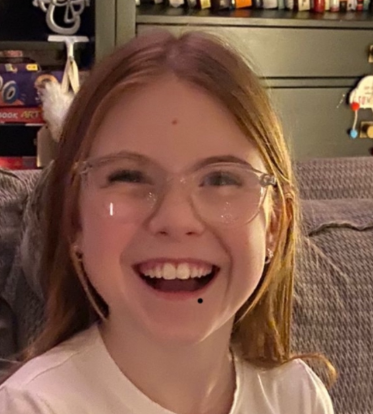
Edie’s family are not driven by blame. They are driven by love for a little girl whose life ended far too soon, and by a determination that no other family should have to endure the same unimaginable loss.
They want transparency about what happened, a clear understanding of whether systems were sufficient, and meaningful change where improvements are needed.
Above all, they want Edie’s legacy to be one of learning, protection, and lives saved.
The family are legally represented by our Director and Head of Inquests, Gareth Naylor and Andrew Scott of Counsel, Parklane Plowden Chambers.
ENDS