



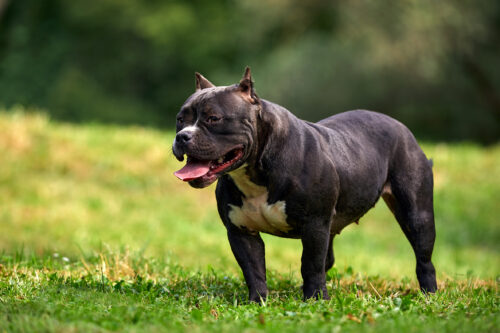
The Government has announced a new process allowing some dog owners to withdraw their XL Bully Certificate of Exemption if they no longer believe their dog meets the official XL Bully type definition. The new guidance was published by the Department for Environment, Food and Rural Affairs (Defra) on 1 October 2026.
Our specialist team has experience in XL Bully cases and has already advised a number of dog owners on the dangerous dogs legislation since the XL Bully restrictions were introduced. The announcement of this latest service offers a route for eligible owners who believe their dogs were incorrectly classified and therefore exempted.
Why was the exemption process introduced?
When restrictions on XL Bully dogs were introduced, many owners faced uncertainty when trying to determine whether their dog met the Government’s XL Bully definition. To avoid the risk of their dog being seized, many responsible owners took the precautionary step of applying for a Certificate of Exemption.
For a number of owners, this was the safest option at the time, particularly where there was doubt as to whether their dog fell within the XL Bully type standard.
What has changed?
Over the past few years, some owners have come to believe that their dogs do not meet the XL Bully definition. However, until now there has been no official procedure allowing them to withdraw a Certificate of Exemption once it had been issued.
Defra has now introduced a formal process that enables eligible owners in England and Wales to apply to withdraw their dog’s Certificate of Exemption if they no longer consider their dog to be an XL Bully type. The Government states that it remains the owner’s responsibility to determine whether their dog meets the XL Bully conformation standard.
What should I do now?
Owners should carefully review the guidance before making an application.
Government advice suggests that if you are unsure whether your dog meets the XL Bully definition, you should not withdraw the certificate and should continue to comply with the conditions that apply to exempted dogs. Once a Certificate of Exemption has been withdrawn, it cannot be reinstated or replaced.
The guidance also makes clear that if a certificate is withdrawn and the dog is later found to be an XL Bully type, the owner could be committing a criminal offence. As a result, the dog may be seized and you may have to go to court.
This is why, if you are in any doubt about your dog’s status, it is important to seek independent advice before taking any action.
Who can apply?
The service is available to registered holders of XL Bully Certificates of Exemption issued in England or Wales between 14 November 2023 and 1 February 2024.
Applications must be made by the person named on the certificate.
How to apply
Owners who believe their dog does not meet the XL Bully definition can review the Government guidance and submit an application online.
Further details can be found in the Government’s guidance on withdrawing a Certificate of Exemption.
How Ison Harrison can help
Dangerous dogs legislation can be complex, and the consequences of getting it wrong can be significant for both owners and their pets.
At Ison Harrison, our experienced solicitors can advise on XL Bully regulations, Certificates of Exemption, dog seizure matters and wider dangerous dog legislation. Whether you are considering withdrawing a Certificate of Exemption or are unsure whether your dog meets the XL Bully definition, our team can help you understand your legal position and options.
To speak to one of our experts, call our New Business Enquiries team on 0800 389 3030 or email hello@isonharrison.co.uk.