



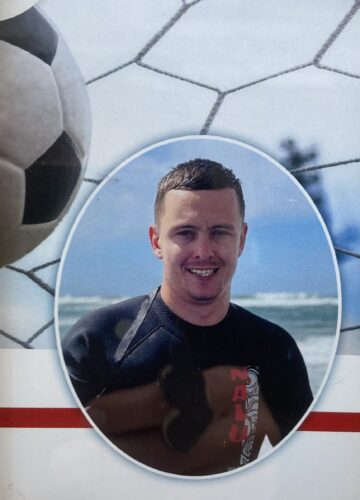
After more than two years of waiting, the inquest into the death of Nicholas “Nicky” Markham has finally concluded. For his family, this was not simply a legal process, but a long, painful struggle to understand how a much‑loved son, partner and brother died while in the care of a mental health service.
Nicky died in April 2024. The inquest did not conclude until May 2026. During that time, his family have lived with unanswered questions, grief, and the exhausting burden of having to relive the final months and night of his life again and again. As his sister told the court, birthdays, Christmases and even the death of his grandmother passed while they were still waiting for clarity.
Throughout the inquest, the family’s concerns were consistent and deeply felt. They spoke of repeated warnings about Nicky’s physical health, his hypothermia, over‑sedation, confusion and deterioration, all concerns they felt were not taken seriously enough at the time. His mother described feeling that she was constantly advocating for her son yet fearing that she was not being heard. Information elicited as part of the inquest investigation revealed that Nicky died after not being physically checked for many hours overnight.
This raised concerns regarding reliance on Oxevision, a contactless monitoring system used in place of face‑to‑face observations during the night before Nicky’s death. The inquest heard that Oxevision is designed only as an adjunct to care, not a replacement for physical checks, and that it does not generate alarms if a patient stops breathing or deteriorates medically. Yet evidence showed that its workflow was not followed correctly: when vital signs could not be obtained, staff did not consistently escalate to in‑person observations as required.
Most strikingly, Oxevision failed to prompt meaningful action during the critical hours of the night. Vital signs were rarely recorded, “movement” was repeatedly noted without explanation, and the final observation recorded Nicky as “asleep” when, in reality, he had already died. The coroner found that some staff misunderstood the system’s purpose and placed undue reassurance in it. Training gaps, uncertainty over responsibility, and over‑reliance on technology all played a role.
While the coroner ultimately concluded that earlier intervention would not have altered the tragic outcome, that finding does not erase the family’s pain. Nor does it diminish the seriousness of what was exposed. Oxevision did not fail because it malfunctioned, but because it was used in ways it was never designed for, quietly replacing human presence during the most vulnerable hours of care.
A key finding of the inquest was the presence of an undiagnosed hypertrophic cardiomyopathy, a condition capable of causing sudden death. Experts agreed that this abnormality made Nicky’s heart particularly vulnerable once his breathing was compromised. Evidence showed that a scan in 2022 had identified an enlarged heart, described during the inquest as a potential “red flag”. However, the coroner concluded that this earlier finding fell outside the scope of the inquest, involved a different trust, and was not revisited during his later care. Although the court determined that clinicians at the time could not reasonably have diagnosed his heart condition based on the information available to them, the family were left with an enduring and painful question: whether earlier recognition of this condition might have changed the course of events.
Nicky’s death was ruled to be from natural causes, arising from a rare and devastating combination of aspiration, hypoxia and an undiagnosed heart condition. Yet the inquest made clear that systems, processes and understanding around observations were flawed. Since his death, changes have reportedly been made. But those changes come too late for Nicky and his family.
For them, the inquest brought some answers, but not peace. What remains is their heartbreak, and a hope that through the inquest lessons have been learnt and no other family will have to endure what they have.