



As Remembrance Day approaches, I find myself – as I do every year – reflecting deeply. Having spent much of my childhood in Bielefeld, Germany, surrounded by the armed forces community, and with many of my family and friends who have served, this time of year carries a profound personal significance.
A number of years ago I was first contacted by a family grieving the loss of a young armed forces veteran to suicide. Soon after, three more families reached out – one of whom was Claire Lilly the former wife of Alan Forcer and their son Josh.
Alan first joined the army aged 16, and was only 18 when he was sent to serve in Kosovo in 1998. After five months in Kosovo he returned to the UK for standard rest and recuperation, but never returned. He saw a civilian GP after admitting he was struggling with his mental health, and the GP declared he was not medically fit to complete the tour. He was eventually discharged from the army in 2003, but it was not until 2017 that he sought further mental health support for his ongoing struggles through Combat Stress, who supported him with his mental health issues for three years, during which he was officially diagnosed with service-attributed PTSD. However, around Christmas 2019, Combat Stress announced that they could no longer support his mental health treatment due to funding issues. Although a referral was made to the NHS, Alan was not offered any further support with his mental health.
Most people reading this will note the significance of that date. A month later the UK was in lockdown due to the COVID-19 pandemic and Alan was denied the positive outlets he used to manage his mental health, mostly gym sessions and interactions with friends, combined with being left with no mental health support from the NHS or Combat Stress, despite being high risk. On May 20th 2020, Alan went missing after leaving his partner’s address. He was reported missing by Claire later that day when he hadn’t returned home. Claire knew of Alan’s mental health struggles and the complex symptoms of his PTSD and was understandably concerned from a trauma informed perspective. She provided all the relevant information to the Police including her concerns about his risk, strong suicidal ideation and the fact he was a veteran. Despite this he was only ever assessed as a medium risk. Tragically, the next day Alan’s body was found in woodland near his home in Stockton-on-Tees, having taken his own life.
The subsequent Inquest concluded in November 2022 (attended by myself alongside our Barrister Lilian Lewis from Garden Court North) and it was clear there was an identifiable flaw in the veteran care pathway, namely that access to mental health support with an understanding of the mentality and culture of the armed forces, was insufficient.
Fundamentally, the care system had failed to provide Alan with the tools to cope with his mental health struggles. Furthermore, there were also flaws in the way in which the missing persons investigation was conducted, due to the fact that they did not recognise the importance of essential information provided by Claire and the unique nature of mental health in those with an armed forces history.
Alan’s passing left an immeasurable void. While the Inquest could never fill that space or ease the pain of grief, it did spark something important. It planted the seed of an idea – one that has since grown into a tangible, life-saving initiative for veterans and their families:
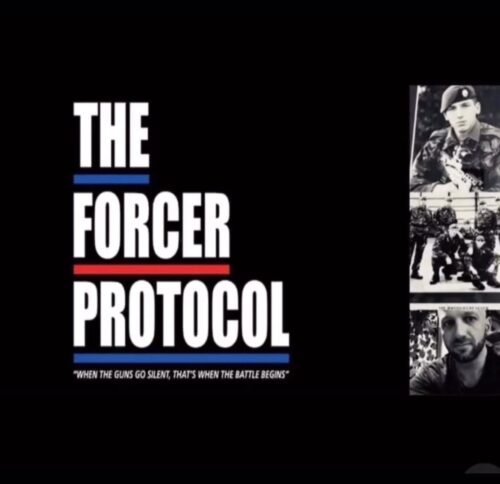
The Forcer Protocol From Tragedy to Transformation
Alan’s Inquest, identified a critical gap in understanding within Cleveland Police regarding the unique challenges faced by veterans, particularly around mental health and suicide risk. Inspired by the existing Herbert Protocol (a tool used to help locate missing persons with dementia), discussions led to the creation of the Forcer Protocol; a pioneering strategy designed to prevent avoidable suicides among those who have served.
The statistics are stark. In 2021, there were 253 recorded veteran suicides in the UK – an average of 4.8 per week. Among veterans aged 25–34, the suicide rate was more than double that of the general population. These figures made it clear: change was not just necessary, it was urgent.
What Is the Forcer Protocol?
The Forcer Protocol is a proactive process. It includes an online form that veterans, carers, or family members can complete, providing police with vital information should a veteran go missing. This includes likely places they may visit and key personal details that can aid in a swift and safe recovery.
Police call handlers now ask whether a missing person has an armed forces background. If so, the protocol ensures they are referred to veteran-specific support services. Officers are also being trained to recognise and respond to the unique needs of veterans in other contexts, such as homelessness or mental health crises.
Claire has partnered with Safe and Found Online to digitise the protocol and build robust referral pathways to veteran-specific services. These partnerships are helping to create a safety net for veterans before they reach crisis point.
A Growing Legacy
Launched during Remembrance Week 2023 as a pilot with Greater Manchester Police, the Forcer Protocol has already made a significant impact. In its first year, it helped locate over 180 missing veterans and connect them to support services.
By November 2024, police forces in Northumbria, Cumbria, Kent, and Cheshire adopted the protocol, with West Yorkshire and Essex to follow soon after.
Earlier this year, I was deeply honoured to be asked to serve as an ambassador for this vital initiative. Yesterday, on 6 November, I attended a parliamentary review of the protocol’s progress. We heard that 26 out of 43 police forces have now adopted the Forcer Protocol, with more in talks for 2026. It is estimated that several hundred lives have already been saved by this initiative.
A Call to Action
As we approach Remembrance Day, I urge everyone in the military community – whether currently serving or a veteran – to sign up to the Forcer Protocol via The Forcer Protocol or Safe and Found Online. You don’t need to be in crisis to register. The protocol is there to support you if that day ever comes, ensuring help is available when it’s needed most.
Alan Forcer’s legacy is one of hope, resilience, and change. Through the Forcer Protocol, we honour his life and the lives of all those who have served. Let us continue to reflect, remember, and act.